
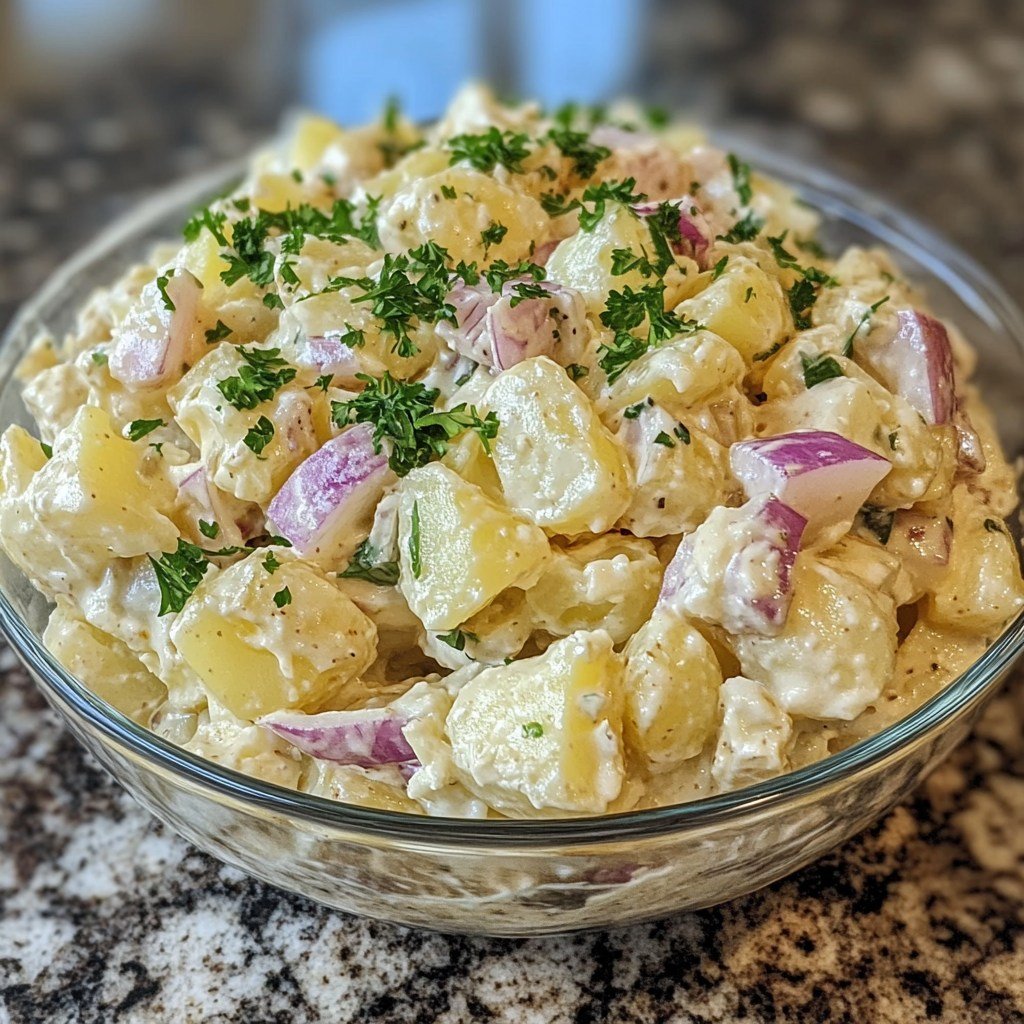
What is French Onion Potato Salad?
This dish is a creative spin on traditional potato salad. Instead of a plain mayo dressing, it uses French onion-inspired flavors—savory, slightly sweet, and deeply aromatic.
As a result, you get soft potatoes coated in a creamy dressing that tastes rich and layered, almost like French onion soup in salad form.
Why This Potato Salad is So Popular
First of all, it’s incredibly flavorful. The combination of creamy dressing and onion-rich seasoning makes it stand out from regular potato salad.
In addition, it works perfectly for BBQs, cookouts, and family gatherings. It pairs well with grilled meats, fried dishes, and sandwiches.
Moreover, it’s easy to prepare ahead of time. In fact, the flavor gets even better after resting in the fridge.
What Makes This Version Special
Unlike basic potato salads, this version focuses on depth of flavor. The onion element adds a savory richness that makes every bite more interesting.
Furthermore, the creamy texture balances the slight tanginess of the dressing, creating a smooth, satisfying side dish that feels both familiar and upgraded.
In short, it’s comfort food with a gourmet twist.
Great French onion potato salad starts with simple ingredients, but the flavor comes from how they’re layered together. Every component plays a role in building that creamy, savory, slightly tangy taste that makes this dish so addictive.
Potato Base Ingredients
Best Potatoes to Use
You’ll need:
- Baby potatoes, Yukon Gold, or red potatoes
These varieties hold their shape well after boiling. Moreover, they stay creamy inside without turning mushy, which is exactly what you want for a good potato salad.
Cooking Essentials
- Salt (for boiling water)
Adding salt while boiling helps season the potatoes from the inside. As a result, every bite tastes balanced, not bland.
French Onion Flavor Elements
Onion Base
You’ll need:
- Yellow onions or sweet onions
- Butter or olive oil
Slow-cooked onions bring that deep, caramelized-style flavor. However, even a quicker sauté can still give a rich onion taste if you’re short on time.
French Onion Seasoning
- French onion soup mix or seasoning blend
- Garlic powder
- Black pepper
This is what gives the salad its signature savory depth. In addition, it adds a mild sweetness that balances the creaminess.
Creamy Dressing Ingredients
Dressing Base
- Mayonnaise
- Sour cream or Greek yogurt
This combination creates a smooth, rich texture with a slight tang. Furthermore, it helps coat the potatoes evenly.
Flavor Boosters
- Dijon mustard
- Apple cider vinegar or lemon juice
- Salt and pepper
These ingredients brighten the dressing and prevent it from feeling too heavy.
For better balance in creamy dressings, culinary references like Serious Eats Cooking Techniques Guide explain how acidity and fat work together to enhance flavor and texture.
Optional Add-Ins
Extra Texture and Flavor
- Chopped chives or green onions
- Crispy bacon bits (optional, not required)
- Shredded cheese (cheddar works well)
These additions make the salad more layered and interesting without overpowering the onion flavor.
STEP-BY-STEP COOKING GUIDE
Now it’s time to bring everything together. This part is where simple ingredients turn into a rich, creamy French onion potato salad with deep flavor and smooth texture. Follow each step carefully for the best result.
Cooking the Potatoes
Boiling the Potatoes
First, wash and cut your potatoes into even-sized chunks if they are large. If you’re using baby potatoes, you can leave them whole.
Next, place them in a large pot and cover with cold water. Add a generous pinch of salt.
Bring the water to a boil, then reduce to a gentle simmer. Cook until the potatoes are fork-tender but not falling apart.
After that, drain them well and let them cool slightly. This helps them firm up so they don’t break when mixing later.
Preparing the Onion Flavor Base
Sautéing the Onions
In a pan, melt butter or heat olive oil over medium heat. Then add sliced onions.
Cook slowly, stirring often. The goal is soft, golden onions with deep flavor. This step builds the signature French onion taste.
However, if you’re short on time, a quick sauté still works, but slow cooking gives a richer result.
Adding Seasoning Depth
Once the onions soften, add garlic powder, black pepper, and French onion seasoning mix.
Stir well so everything blends together. As a result, the onions become savory, slightly sweet, and deeply aromatic.
Making the Creamy Dressing
Mixing the Base
In a large bowl, combine:
- Mayonnaise
- Sour cream or Greek yogurt
- Dijon mustard
Whisk until smooth and creamy. This forms the base of your dressing.
Balancing the Flavor
Next, add a splash of vinegar or lemon juice. This small step is important because it brightens the richness and keeps the salad from feeling too heavy.
Season with salt and pepper, then taste and adjust if needed.
For balanced emulsions and creamy dressings, culinary techniques explained in Serious Eats Cooking Techniques Guide highlight how acidity improves both flavor and texture stability.
Combining Everything
Mixing Potatoes and Dressing
Once the potatoes are slightly cooled, gently fold them into the creamy dressing.
Be careful not to overmix. You want the potatoes coated, not mashed.
Adding Onion Flavor
Now add the sautéed onions into the bowl. Stir gently so the onion flavor spreads evenly throughout the salad.
At this stage, the aroma should be rich, savory, and slightly sweet.
Chilling for Best Flavor
Resting Time
Cover the bowl and refrigerate for at least 1–2 hours.
This resting time is important because it allows the flavors to blend and deepen. In fact, the salad often tastes even better the next day.
Final Touch Before Serving
Garnishing
Before serving, sprinkle chopped chives or green onions on top. This adds freshness and a light crunch.
If desired, you can also add a little extra black pepper for a finishing touch.
TIPS, VARIATIONS & SERVING IDEAS
Now that your French onion potato salad is ready, a few small tweaks can take it from really good to unforgettable. This is where flavor balance, texture control, and serving style make all the difference.
Tips for the Best Texture and Flavor
Don’t Overcook the Potatoes
First, make sure the potatoes are just fork-tender. If they’re too soft, they’ll break apart when mixed.
On the other hand, undercooked potatoes will stay too firm and won’t absorb the dressing properly. So, timing matters a lot here.
Cool Before Mixing
Let the potatoes cool slightly before adding the dressing. If they are too hot, the mayonnaise-based dressing may loosen or become oily.
However, they shouldn’t be completely cold either. Slight warmth actually helps them absorb flavor better.
Layer the Onion Flavor
Instead of mixing all onions at once, reserve a small portion for topping. This gives the salad extra texture and a stronger onion aroma in every bite.
Flavor Variations
Subheading: Smoky Bacon Version
If you want a richer version, add crispy bacon bits. They bring saltiness and crunch, which pairs perfectly with the creamy dressing.
Cheesy Onion Twist
For extra indulgence, mix in shredded cheddar cheese. It melts slightly into the warm potatoes, creating a richer, more comforting bite.
Herb-Loaded Fresh Version
Add fresh herbs like parsley, dill, or extra chives. This version tastes lighter and more refreshing, especially for summer meals.
Serving Suggestions
Subheading: Best Pairings
This potato salad works beautifully as a side dish. It pairs especially well with grilled meats, sandwiches, and fried dishes.
Because of its creamy and savory profile, it balances smoky or crispy main dishes very well.
Serving Temperature
You can serve it chilled or slightly cool. Chilled versions taste more structured, while slightly cool versions feel creamier and more flavorful.
Presentation Tips
Before serving, give it a gentle stir and add a final sprinkle of herbs on top. This improves both appearance and freshness.
Storage Tips
Keeping It Fresh
Store leftovers in an airtight container in the refrigerator for up to 3–4 days.
However, the flavor often improves after the first day as the ingredients continue to blend.
Common Mistakes to Avoid
- Overmixing the potatoes (can turn them mushy)
- Skipping the cooling step before dressing
- Using too much seasoning at once
- Not tasting before chilling
Small adjustments can make a big difference in the final result.
For best results in creamy side dishes and balanced dressings, cooking guidance like Serious Eats Cooking Techniques Guide explains how fat, acid, and seasoning work together to create depth and stability.
FAQs (FREQUENTLY ASKED QUESTIONS)
This section answers common questions people usually ask when making French onion potato salad. These quick answers help you fix problems, improve flavor, and get consistent results every time.
Can I make French onion potato salad ahead of time?
Yes, absolutely. In fact, it often tastes better after resting in the fridge for a few hours or overnight. The flavors have time to blend, making it richer and more balanced.
However, for best texture, you may want to add fresh herbs right before serving.
What type of potatoes work best?
Waxy potatoes like Yukon Gold or red potatoes are ideal. They hold their shape well and stay creamy inside.
On the other hand, starchy potatoes like russets can break apart too easily and make the salad mushy.
How do I prevent the potato salad from becoming watery?
First, make sure to drain the potatoes well after boiling. Then let them cool slightly before mixing.
Also, avoid overusing liquid ingredients like vinegar or dressing. Balance is key for a creamy but stable texture.
Can I make it healthier?
Yes, you can. Simply replace part of the mayonnaise with Greek yogurt. This reduces fat while keeping the creamy texture.
In addition, you can increase herbs and reduce seasoning mix slightly for a lighter version.
What gives this potato salad its “French onion” flavor?
The flavor mainly comes from sautéed onions and French onion seasoning mix. These create a deep, savory, slightly sweet taste similar to French onion soup.
Because of this, the salad has a richer and more layered flavor than traditional potato salad.
Can I add protein to make it a full meal?
Yes, you can easily turn it into a main dish. Popular additions include grilled chicken or crispy bacon.
However, even without meat, it remains filling and satisfying due to the creamy base.
How long does it last in the fridge?
It can last about 3 to 4 days when stored in an airtight container.
However, for best taste and texture, try to consume it within the first 48 hours.
Why does my potato salad taste bland?
This usually happens when the potatoes are not salted properly during boiling or when seasoning is added too late.
To fix this, always season in layers—during boiling, mixing, and final tasting.
Can I serve it warm instead of cold?
Yes, but it will taste slightly different. Warm potato salad feels creamier and softer, while chilled versions taste more structured and refreshing.
Both versions are good—it depends on personal preference.
What dishes go best with it?
This salad pairs well with grilled meats, roasted chicken, burgers, or fried foods. Its creamy and savory flavor balances smoky and crispy dishes very well.