
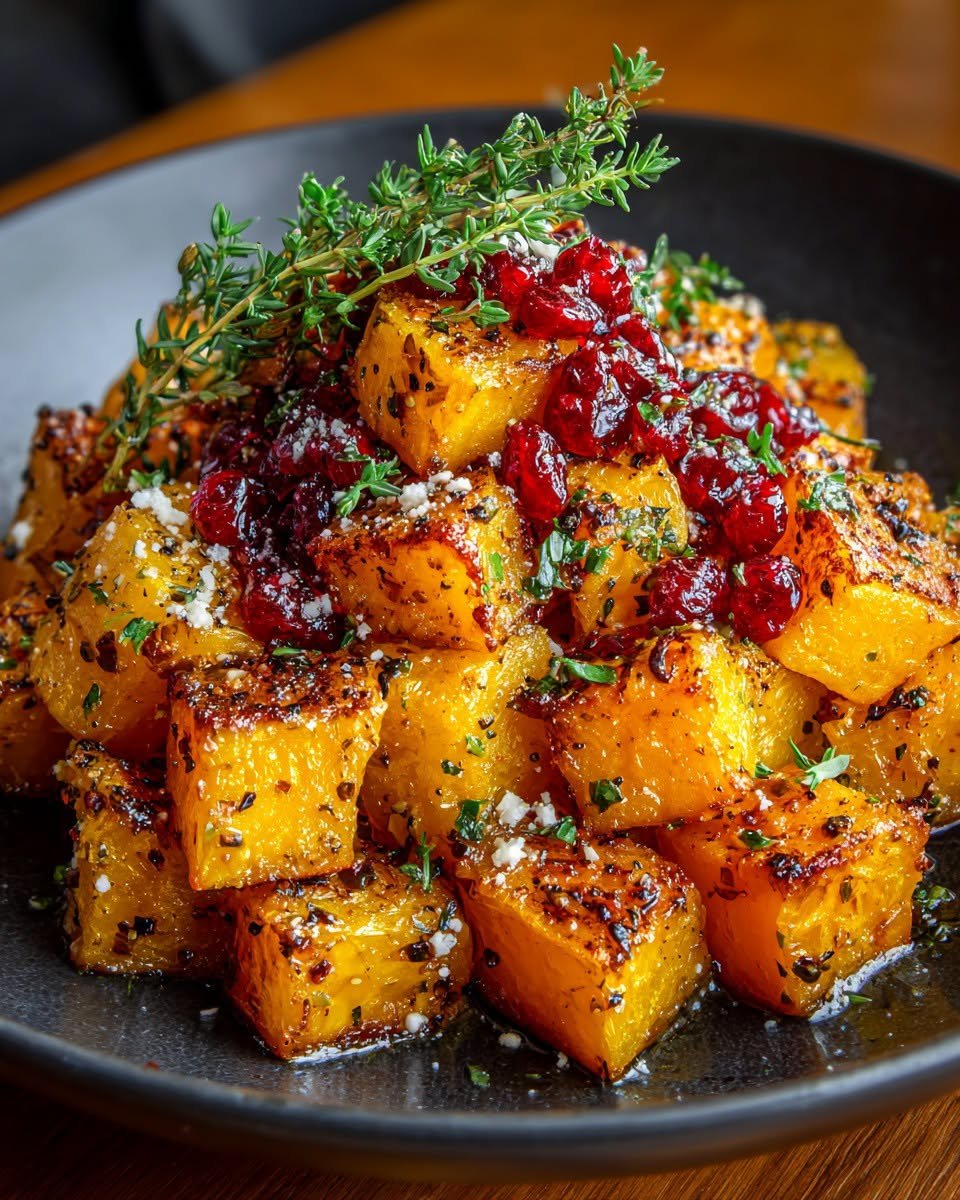
Caramelized Butternut Squash with Ricotta and Cranberry Honey Drizzle
Autumn cooking just hits different, doesn’t it? Warm oven, sweet roasted veggies, and that comforting aroma filling the kitchen… it’s pure magic. And this dish? It’s right at the heart of that feeling.
This caramelised butternut squash with ricotta and cranberry honey drizzle brings together creamy, sweet, and tangy flavours in one beautiful plate. First, the squash roasts until golden and slightly crisp at the edges. Then, it’s paired with soft, airy ricotta. Finally, a glossy cranberry honey drizzle ties everything together with a bright, festive kick.
PrintCaramelized Butternut Squash with Ricotta and Cranberry Honey

- Author: clare recipe
Ingredients
Instructions
So, whether you’re planning a cosy dinner or a holiday table showstopper, this recipe fits right in. It looks impressive, yet it’s simple enough for a relaxed evening at home.
Why You’ll Love This Recipe
Sweet and Savoury Harmony
Right from the first bite, you get contrast—and lots of it. The natural sweetness of roasted squash meets creamy ricotta and a sharp cranberry glaze. As a result, every forkful feels balanced and exciting.
Simple, Yet Looks Gourmet
Even though it feels like something from a restaurant menu, the process is straightforward. Plus, the ingredients are easy to find, which makes it even better.
Perfect for Seasonal Tables
Especially during autumn and winter gatherings, this dish shines. In fact, it pairs beautifully with roasted mains or even as a vegetarian centrepiece.
Naturally Comforting
Because of its warm flavours and soft textures, it delivers serious comfort food energy. Still, it stays light enough not to feel heavy.
What Is Caramelized Butternut Squash?
Caramelisation happens when natural sugars in food cook at high heat and turn golden brown. Consequently, the squash becomes slightly crisp outside and soft inside.
Butternut squash, in particular, works perfectly here. Why? Because it’s naturally sweet and dense. Therefore, when roasted, it develops deep flavour and a buttery texture.
Unlike plain roasted squash, caramelised squash has richer flavour notes. It’s slightly nutty, a bit sweet, and full of depth.
For a deeper understanding of seasonal vegetables and their benefits, you can explore trusted nutrition insights from the Harvard T.H. Chan School of Public Health Nutrition Source.
Ingredients Overview
Let’s break it down simply. Each element plays its own role, and together, they create balance.
For the Caramelised Squash
You’ll need:
- Butternut squash, peeled and cubed
- Olive oil
- Sea salt
- Black pepper
The olive oil helps everything roast evenly, while seasoning brings out the natural sweetness.
For the Ricotta Base
- Fresh ricotta cheese
- Lemon zest
- Optional herbs like thyme or basil
The ricotta adds creaminess and a soft, milky contrast. Meanwhile, lemon zest keeps it fresh and light.
For the Cranberry Honey Drizzle
- Honey
- Cranberries (fresh or dried)
- Orange juice
- Optional splash of balsamic-style acidity (just a touch for balance)
This drizzle is the “wow” factor. It’s glossy, tangy, and slightly tart—perfect against the sweet squash.
If you’re unsure about safe storage for fresh ingredients like squash or dairy, check the FoodSafety.gov food storage guide for reliable handling tips.
Optional Toppings (but highly recommended!)
- Toasted walnuts or pecans
- Pumpkin seeds
- Fresh thyme leaves
- Pomegranate seeds
These extras add crunch and freshness, making the dish even more exciting.
Choosing the Best Butternut Squash
Getting this right matters more than most people think. Because honestly, even the best recipe can fall flat if the squash isn’t up to scratch.
How to Select a Ripe Squash
First things first, look for a butternut squash that feels heavy for its size. That usually means it’s packed with moisture and flavour. Also, the skin should be firm, matte, and free from soft spots.
Moreover, a deep beige colour is a good sign. If it looks too pale or has green patches, it’s likely not fully ripe yet.
Signs of Freshness
In addition, give it a quick feel test. The skin should be hard—almost impossible to pierce with a fingernail. If it feels soft anywhere, skip it.
Furthermore, the stem should be intact and dry. A missing or mushy stem? That’s a red flag.
Organic vs Conventional
Now, here’s the thing—both work fine. However, organic squash often has a slightly richer taste. Still, if conventional is what you have, don’t worry. The roasting process brings out plenty of natural sweetness either way.
Size Considerations
Medium-sized squash is your best bet. Why? Because it tends to have a better flesh-to-seed ratio. Bigger ones can be watery, while smaller ones may be tricky to peel.
Equipment You’ll Need
No fancy tools here, just the basics.
Baking Sheet
A sturdy baking tray is essential. Ideally, choose one with a bit of space so the squash can roast properly instead of steaming.
Mixing Bowls
You’ll need at least two—one for seasoning the squash and another for preparing the cranberry honey drizzle.
Saucepan
This is where the magic happens for the drizzle. A small saucepan works perfectly.
Sharp Chef’s Knife
Trust me, this is non-negotiable. Butternut squash can be tough, so a sharp knife keeps things safe and smooth.
Parchment Paper
Not strictly required, but highly recommended. It prevents sticking and makes cleanup way easier.
How to Make Caramelised Butternut Squash with Ricotta and Cranberry Honey Drizzle
Now we’re getting into the fun part. Everything starts to come together here—slowly, but beautifully.
Prepare the Squash
First, peel the butternut squash carefully. It might feel a bit stubborn, but take your time. Then, slice it in half and scoop out the seeds.
After that, cut it into evenly sized cubes. This is important because uniform pieces cook evenly. Otherwise, you’ll end up with some soft pieces and some still firm ones.
Season the Squash
Next, place the cubes in a large bowl. Drizzle with olive oil, then sprinkle salt and black pepper.
Now here’s a little trick—don’t overcrowd the bowl. Instead, toss gently so every piece gets coated properly.
The goal is simple: light coating, not drowning.
Roast Until Perfectly Caramelised
Preheat your oven to a high temperature—this is where caramelisation begins.
Spread the squash on a baking tray in a single layer. That’s crucial. If they’re too close, they’ll steam instead of roast.
Then, roast until the edges turn golden and slightly crisp. Halfway through, flip them gently for even browning.
You’ll know it’s ready when:
- The edges look caramel brown
- The inside is soft and tender
- The aroma turns slightly nutty and sweet
Prepare the Ricotta
While the squash roasts, move on to the ricotta.
Place it in a bowl and whip it lightly with a fork or whisk. This makes it fluffier and smoother.
Then, add a little lemon zest. It lifts the flavour instantly and keeps everything from feeling too heavy.
Make the Cranberry Honey Drizzle
Now for the star finish.
In a small saucepan, warm honey gently. Add cranberries and a splash of orange juice. Stir slowly as the mixture thickens.
As it cooks, the cranberries soften and release a tangy burst of flavour. The honey turns glossy and rich.
Keep it low and slow—no rushing here. Otherwise, it can turn too thick or overly sticky.
Assemble the Dish
Finally, it’s time to bring everything together.
Start with a generous spoon of whipped ricotta on a serving plate. Then, layer the caramelised squash on top or around it.
After that, drizzle the warm cranberry honey sauce over everything.
To finish, sprinkle toasted nuts or fresh herbs for texture and colour.
And just like that, it’s done—simple, yet absolutely stunning.
At this stage, you’ve got the technique locked in. The roasting, the creaminess, the drizzle—it all starts to feel like second nature.