
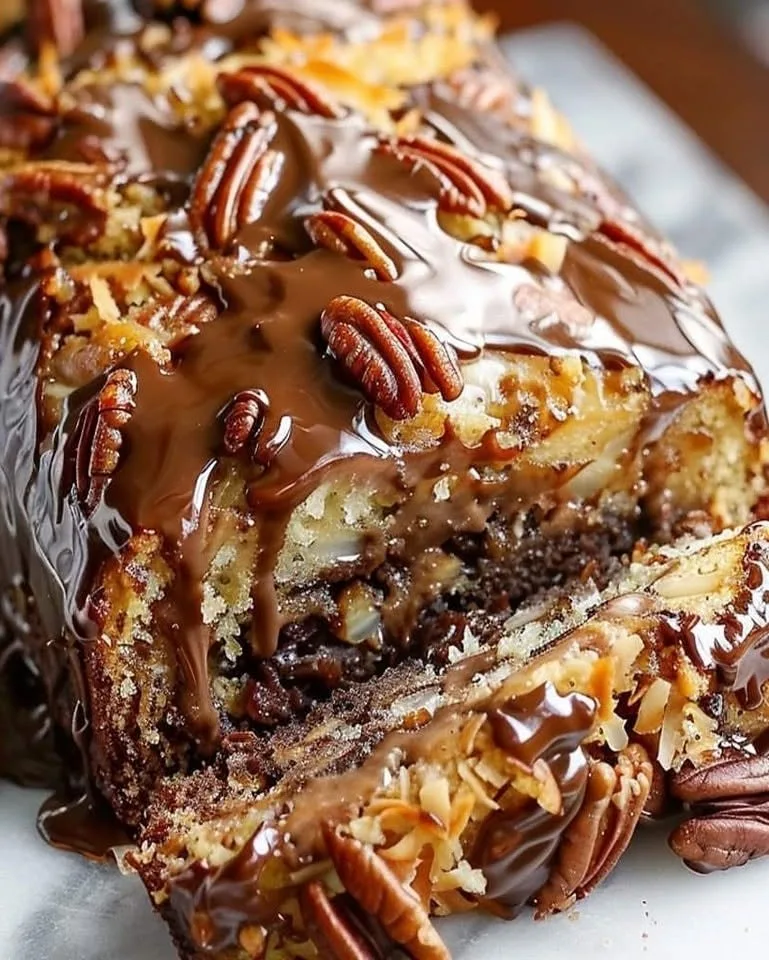
German Chocolate Pecan Pound Cake – Introduction and Recipe Overview
German Chocolate Pecan Pound Cake is a rich, buttery dessert that combines the classic texture of homemade pound cake with the irresistible flavors of German chocolate, toasted pecans, and sweet coconut. Every slice offers a tender, dense crumb, deep chocolate flavor, and a delicious nutty finish that makes this cake perfect for special occasions or everyday indulgence.
Inspired by the beloved flavors of German chocolate cake, this pound cake brings together two favorite desserts in one. The traditional pound cake base provides a buttery richness, while chocolate adds depth and pecans contribute a satisfying crunch. Coconut can be incorporated into the batter or used in a sweet topping to create the familiar tropical-nutty combination associated with German chocolate desserts.
Whether you’re baking for a holiday gathering, a birthday celebration, a family dinner, or simply craving a homemade chocolate dessert, this cake is an excellent choice. Its elegant appearance and rich flavor make it feel special without requiring complicated decorating techniques.
What Makes German Chocolate Pecan Pound Cake Special?
Despite its name, German chocolate cake is not originally from Germany. It is associated with sweet baking chocolate developed by American chocolate maker Samuel German. Over time, the name became linked to the familiar combination of chocolate cake, coconut, and pecans.
This pound cake takes inspiration from those flavors while offering a different texture. Instead of the light, layered structure of a traditional German chocolate cake, it has the rich, compact crumb of a classic pound cake.
The combination of ingredients creates several layers of flavor:
Chocolate: Provides a deep, rich taste that complements the buttery cake.
Butter: Creates a smooth, tender crumb and a satisfying richness.
Pecans: Add a nutty flavor and a pleasant crunch.
Coconut: Contributes sweetness and the distinctive flavor associated with German chocolate desserts.
Vanilla: Enhances the chocolate and buttery notes.
Chocolate or coconut-pecan topping: Adds another layer of indulgence and makes the finished cake especially attractive.
The result is a comforting homemade dessert that combines traditional pound cake richness with classic German chocolate flavors.
Why You’ll Love This Recipe
Rich chocolate flavor: Chocolate and cocoa create a deliciously deep flavor.
Buttery pound cake texture: The dense, tender crumb makes every slice satisfying.
Crunchy pecans: Pecans add texture and a warm, nutty taste.
Sweet coconut: Coconut brings a classic German chocolate-inspired flavor.
Perfect for gatherings: The cake slices beautifully and is easy to share.
Make-ahead friendly: The flavor develops nicely as the cake rests.
Easy to customize: Add a chocolate glaze, coconut-pecan topping, or extra toasted pecans.
German Chocolate Pecan Pound Cake at a Glance
Prep time: 25 minutes
Cook time: 60–75 minutes
Cooling time: Approximately 1 hour
Total time: Approximately 2 hours 40 minutes
Servings: 12–16 slices
Course: Dessert
Cuisine: American-inspired
Cooking method: Oven-baked
Difficulty: Moderate
Ingredients Overview
This recipe combines familiar pound cake ingredients with chocolate, pecans, and coconut for a rich dessert with plenty of texture.
Unsalted Butter
Butter is essential for the classic pound cake texture. It provides richness, helps create a tender crumb, and carries the flavors of chocolate and vanilla.
Use softened butter rather than melted butter so it can be creamed properly with the sugar.
Granulated Sugar
Sugar sweetens the cake and helps create a fine, tender texture when creamed with butter. It also contributes to the cake’s golden-brown exterior.
Eggs
Eggs provide structure, moisture, and richness. Adding them gradually to the creamed butter and sugar helps create a smoother batter.
Room-temperature eggs are generally easier to incorporate evenly.
All-Purpose Flour
Flour gives the cake its structure and helps it hold its shape when sliced. Accurate measurement is particularly important for pound cake because too much flour can make the texture dry or heavy.
German Sweet Chocolate
German sweet chocolate provides a mild, sweet chocolate flavor that complements the buttery cake. Semisweet chocolate can be substituted if you prefer a deeper chocolate taste.
Cocoa powder can also contribute chocolate flavor, depending on the final recipe formulation.
Buttermilk or Sour Cream
A modest amount of buttermilk or sour cream can add moisture and a subtle tang that balances the sweetness of the chocolate and sugar.
These ingredients also help create a softer texture than a traditional pound cake made entirely with butter, eggs, flour, and sugar.
Pecans
Pecans provide the nutty flavor and crunchy texture that make this dessert especially satisfying.
Chopped pecans can be folded into the batter, sprinkled over the top, or incorporated into a coconut-pecan topping. Lightly toasting them beforehand can enhance their aroma.
Shredded Coconut
Sweetened shredded coconut adds texture and the distinctive flavor associated with German chocolate desserts.
You can fold some into the batter or reserve it for a topping, depending on how prominent you want the coconut flavor to be.
Vanilla Extract
Vanilla enhances the buttery flavor and complements the chocolate, pecans, and coconut.
Optional Coconut-Pecan Topping
A topping made with evaporated milk, egg yolks, sugar, butter, coconut, and pecans can give the cake a richer, more traditional German chocolate-inspired finish.
Alternatively, a simple chocolate glaze and toasted pecans offer a quicker, less elaborate finish.
Tips for a Moist and Flavorful Pound Cake
Use room-temperature ingredients. Softened butter, room-temperature eggs, and room-temperature dairy ingredients generally combine more smoothly.
Cream the butter and sugar thoroughly. Beating them until light and fluffy helps incorporate air into the batter.
Add eggs gradually. Mix each egg into the batter before adding the next to help maintain a smooth consistency.
Measure the flour carefully. Too much flour can create a dry or overly dense cake.
Avoid overmixing. Once the flour is added, mix only until the ingredients are combined.
Toast the pecans lightly. A few minutes of toasting can deepen their flavor, but let them cool before adding them to the batter.
Bake patiently. Pound cakes take longer to bake than many standard cakes. Check the center with a toothpick or cake tester before removing the pan from the oven.
Cool before adding toppings. Allow the cake to cool properly so a glaze or coconut-pecan topping stays in place.
German Chocolate Pecan Pound Cake – Ingredients and Preparation Tips
Ingredients for German Chocolate Pecan Pound Cake
This recipe makes one rich, buttery pound cake with chocolate flavor, chopped pecans, and sweet coconut. It serves approximately 12–16 people.
For the Pound Cake
1 cup (227 g) unsalted butter, softened
2 cups (400 g) granulated sugar
4 large eggs, at room temperature
2½ cups (315 g) all-purpose flour
4 oz (113 g) German sweet chocolate, melted and cooled slightly
½ cup (120 ml) buttermilk, at room temperature
1 teaspoon vanilla extract
½ teaspoon baking powder
¼ teaspoon salt
¾ cup (85 g) chopped pecans
½ cup (40 g) sweetened shredded coconut
For the Coconut-Pecan Topping
½ cup (120 ml) evaporated milk
½ cup (100 g) granulated sugar
2 large egg yolks
3 tablespoons (42 g) unsalted butter
½ teaspoon vanilla extract
¾ cup (60 g) sweetened shredded coconut
½ cup (55 g) chopped pecans
Optional Chocolate Drizzle
2 oz (57 g) semisweet chocolate
1 teaspoon coconut oil or unsalted butter
Ingredient Notes and Substitutions
Butter
Unsalted butter provides the rich flavor and tender texture expected from a pound cake. Allow it to soften at room temperature until it gives slightly when pressed but is not oily or melted.
If using salted butter, reduce or omit the additional salt.
German Sweet Chocolate
German sweet chocolate gives the cake a mild, sweet chocolate flavor. If it is unavailable, semisweet chocolate can be substituted, although the finished cake will taste slightly more intense.
Melt the chocolate gently and allow it to cool before adding it to the batter.
All-Purpose Flour
All-purpose flour provides the cake’s structure. Measure it carefully by weight or spoon it into a measuring cup and level it off.
Avoid packing flour into the cup, as excess flour can make the cake dry and heavy.
Buttermilk
Buttermilk adds moisture and a subtle tang that balances the sweetness of the chocolate and coconut.
If you do not have buttermilk, combine ½ cup (120 ml) milk with 1½ teaspoons lemon juice or white vinegar. Let the mixture stand for 5–10 minutes before using.
Pecans
Pecans contribute a buttery, nutty flavor and pleasant crunch. Toasting them lightly before adding them to the batter or topping can intensify their flavor.
If you have a nut allergy, omit the pecans rather than substituting another nut.
Shredded Coconut
Sweetened shredded coconut provides the familiar flavor of German chocolate desserts. Unsweetened coconut can be used for a less sweet result, although the texture and flavor may differ slightly.
Evaporated Milk
Evaporated milk creates a rich base for the coconut-pecan topping. Do not confuse it with sweetened condensed milk, which contains added sugar and is much thicker.
Egg Yolks
Egg yolks help thicken the coconut-pecan topping and give it a rich, custard-like texture. Cook the topping gently while stirring continuously to prevent the yolks from scrambling.
Recommended Equipment
Prepare these tools before you begin:
10-inch (25 cm) tube pan or Bundt pan
Electric hand mixer or stand mixer
Large mixing bowl
Medium mixing bowl
Heatproof bowl for melting chocolate
Small saucepan for the topping
Whisk and rubber spatula
Measuring cups and spoons or kitchen scale
Cooling rack
Toothpick or cake tester
Pastry brush or spatula for greasing and spreading
A tube pan is especially useful for pound cake because its central opening helps the cake bake more evenly.
Preparation Tips Before Baking
1. Prepare the Pan
Preheat your oven to 325°F (165°C).
Grease a 10-inch tube or Bundt pan thoroughly with softened butter or baking spray. Pay particular attention to the center tube and any decorative grooves.
Dust lightly with flour if needed, tapping out the excess.
2. Soften the Butter
Allow the butter to soften at room temperature. It should be pliable but still hold its shape.
Properly softened butter creams more effectively with sugar, helping create a smooth batter.
3. Melt the Chocolate
Chop the German sweet chocolate into small pieces and melt it gently in a microwave-safe bowl using short 15–20-second intervals, stirring between each interval.
Alternatively, melt it in a heatproof bowl over gently simmering water.
Allow the chocolate to cool until it is fluid but no longer hot before adding it to the batter.
4. Prepare the Eggs and Buttermilk
Bring the eggs and buttermilk to room temperature before mixing.
This helps the ingredients combine more evenly and reduces the risk of the batter separating when the eggs are added.
5. Measure the Dry Ingredients
Whisk together the flour, baking powder, and salt in a separate bowl.
This distributes the leavening agent evenly throughout the flour and helps the cake bake consistently.
6. Prepare the Pecans and Coconut
Chop the pecans into small pieces and measure the shredded coconut.
If you toast the pecans, let them cool completely before folding them into the batter.
Tips for a Tender, Moist Pound Cake
Cream the butter and sugar until light and fluffy.
Add the eggs one at a time, mixing after each addition.
Make sure the melted chocolate has cooled before incorporating it.
Alternate the flour mixture and buttermilk gradually, beginning and ending with the flour mixture.
Fold in the pecans and coconut gently.
Avoid opening the oven door frequently during baking.
Let the cake cool in the pan for about 10–15 minutes before carefully turning it out.
German Chocolate Pecan Pound Cake – Step-by-Step Instructions
Preheat the Oven and Prepare the Pan
Preheat your oven to 325°F (165°C).
Generously grease a 10-inch (25 cm) tube pan or Bundt pan with butter or baking spray, making sure to cover the center tube and all the grooves.
Lightly dust the pan with flour if needed, then tap out any excess. Properly preparing the pan helps prevent the cake from sticking when you turn it out.
Melt the German Chocolate
Chop 4 oz (113 g) of German sweet chocolate into small pieces.
Place the chocolate in a heatproof bowl and microwave in 15–20-second intervals, stirring after each interval until smooth.
Alternatively, melt it in a heatproof bowl set over a saucepan of gently simmering water.
Allow the chocolate to cool slightly. It should remain fluid but should not be hot when added to the batter.
Cream the Butter and Sugar
In a large mixing bowl, beat together:
1 cup (227 g) softened unsalted butter
2 cups (400 g) granulated sugar
Use an electric mixer on medium speed for approximately 3–5 minutes, until the mixture looks lighter in color and fluffy.
Scrape down the sides of the bowl as needed to ensure the butter and sugar are evenly combined.
This step helps incorporate air into the batter, contributing to the cake’s texture.
Add the Eggs
Add 4 large eggs, one at a time, beating well after each addition.
Scrape down the bowl occasionally to make sure everything is incorporated.
If the mixture looks slightly separated, continue mixing briefly before proceeding. Avoid adding the eggs too quickly, as gradual incorporation helps maintain a smooth batter.
Add the Melted Chocolate and Vanilla
Pour the slightly cooled melted chocolate into the butter mixture.
Add 1 teaspoon vanilla extract.
Mix on low speed until the chocolate is evenly incorporated and the batter has a uniform color.
Avoid adding hot chocolate, which could soften the butter excessively or affect the eggs.
Combine the Dry Ingredients and Buttermilk
In a separate bowl, whisk together:
2½ cups (315 g) all-purpose flour
½ teaspoon baking powder
¼ teaspoon salt
Measure ½ cup (120 ml) buttermilk separately.
Add the flour mixture to the chocolate batter in three additions, alternating with the buttermilk in two additions. Begin and finish with the flour mixture.
Mix on low speed only until the ingredients are combined.
Avoid overmixing, as excessive mixing can make the cake tough.
Fold in the Pecans and Coconut
Add:
¾ cup (85 g) chopped pecans
½ cup (40 g) sweetened shredded coconut
Use a rubber spatula to fold them gently into the batter until evenly distributed.
The batter should be thick and rich, with the pecans and coconut spread throughout.
Transfer the Batter to the Pan
Spoon the batter evenly into the prepared tube or Bundt pan.
Smooth the surface with a spatula and gently tap the pan on the counter to release any large air pockets.
Place the pan on the center rack of the preheated oven.
Bake the Pound Cake
Bake for approximately 60–75 minutes.
Begin checking around the 60-minute mark. The cake should have a firm surface and a toothpick inserted into the thickest part should come out clean or with a few moist crumbs.
If the center is still wet, continue baking in 5-minute intervals.
If the top is browning too quickly, loosely cover it with aluminum foil for the remaining baking time.
Avoid opening the oven door repeatedly during the first 45–50 minutes, as sudden temperature changes can affect the cake’s rise.
Cool and Remove the Cake
Remove the cake from the oven and place the pan on a cooling rack.
Let it rest in the pan for approximately 10–15 minutes.
Carefully loosen the edges if necessary, then invert the cake onto the rack. Allow it to cool completely before adding the topping.
Do not rush this step. A warm cake can break when removed from the pan, and the topping may slide off if the surface is still hot.
Prepare the Coconut-Pecan Topping
While the cake cools, combine the following ingredients in a medium saucepan:
½ cup (120 ml) evaporated milk
½ cup (100 g) granulated sugar
2 large egg yolks
3 tablespoons (42 g) unsalted butter
Whisk everything together over medium-low heat.
Cook for approximately 6–10 minutes, stirring continuously, until the mixture thickens enough to coat the back of a spoon.
Keep the heat moderate and avoid allowing the mixture to boil vigorously. This helps prevent the egg yolks from scrambling.
Remove the saucepan from the heat and stir in:
½ teaspoon vanilla extract
¾ cup (60 g) sweetened shredded coconut
½ cup (55 g) chopped pecans
Mix until the coconut and pecans are evenly coated.
Allow the topping to cool for several minutes until it thickens slightly but remains spreadable.
Add the Topping
Place the completely cooled pound cake on a serving plate.
Spoon the coconut-pecan topping over the top, allowing some of it to settle naturally along the sides.
Spread it gently with a spatula, keeping the topping in an even layer.
For an extra chocolate finish, melt 2 oz (57 g) semisweet chocolate with 1 teaspoon coconut oil or butter, then drizzle it over the cake.
Allow the chocolate drizzle to set before slicing.
Slice and Serve
Use a sharp knife to cut the cake into 12–16 slices.
Serve at room temperature so the buttery crumb remains tender and the chocolate flavor is fully appreciated.
This cake pairs beautifully with coffee, tea, or a glass of cold milk.
Troubleshooting Common Problems
The Cake Is Dry
Overbaking or measuring too much flour can produce a dry cake. Measure the flour carefully and begin checking for doneness at around 60 minutes.
The Cake Sticks to the Pan
Grease the entire pan thoroughly, including the center tube and grooves. Let the cake rest for 10–15 minutes before turning it out, but avoid leaving it in the pan for too long.
The Batter Looks Curdled
The ingredients may be at different temperatures, or the eggs may have been added too quickly. Use room-temperature ingredients and add the eggs one at a time.
The Center Is Undercooked
Continue baking in 5-minute intervals until a toothpick inserted into the center comes out without wet batter.
The Coconut-Pecan Topping Is Too Thin
Return it to low heat and continue stirring until it thickens. Allow it to cool slightly before spreading it over the cake.
The Topping Becomes Grainy
The mixture may have cooked too quickly or the egg yolks may have overheated. Use moderate heat and stir continuously while cooking.
Tips for the Best Results
Use room-temperature ingredients for a smoother batter.
Allow the melted chocolate to cool slightly before mixing.
Alternate the flour mixture and buttermilk gradually.
Avoid overmixing once the flour is added.
Cool the cake completely before adding the topping.
Cook the coconut-pecan topping gently until thickened.
Refrigerate leftover cake if it has a perishable topping.